Showing posts with label FOOD. Show all posts

Wednesday, 3 May 2023

THE STORY OF MY LIFE. MUMMY IN NEED OF BABY FOOD AND GOD AND I ANSWERED.


DON'T SHOW THAT EVOLVED APE RICHARD DAWKINS THIS VIDEO!  HE IS TOO DELUDED TO UNDERSTAND, FEEL OR EVEN CARE!


THE STORY OF MY LIFE!


 MUMMY IN NEED OF BABY FOOD AND GOD (WHEN HE IS AROUND!) AND I ALWAYS ANSWERED!

 MOST BELIEVERS IN GOD LACK COMPASSION, BUT NEVER STOP PREACHING THEIR RELIGION WHEN THEIR ACTIONS ARE IN GENERAL DEVOID OF CHARITABLE ACTS!

WHETHER HE "EXISTS" OR NOT, GOD IS THE VERY BEST THAT WE HAVE, NOT GODLESS "DEMOCRACIES"!

BAFS

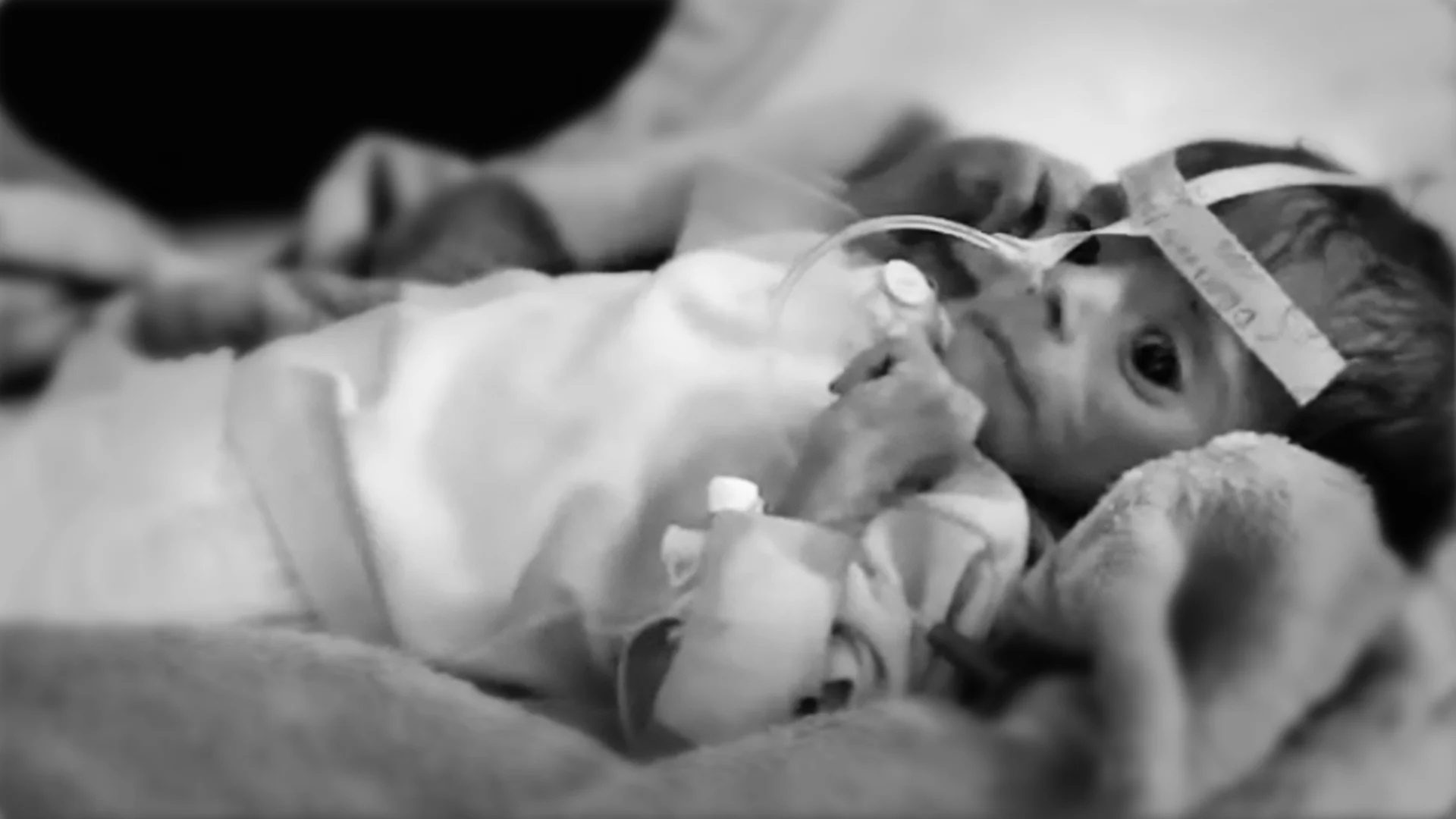
"He’s too weak to cry. We need help now."

Udai’s parents hold his hands and cry.

The doctor just gave him a 30% chance of survival. He’s suffering from dehydration, diarrhea, and a chest infection. However - this all began with malnutrition.

“We spent everything we had to get to the hospital 3 weeks ago. It drained us of everything we had. Money for food - everything. They said there was no bed.”

“Now we are back, and the doctors said there’s nothing he can do. The malnutrition is too severe.”

Udai was breastfed for the first 20 days of his life until his mother became too malnourished to produce milk. Unable to afford formula, they were forced to supplement with sugar water.

“In his village, even clean water is hard to find” says his doctor. “Udai’s body is weak. Every time he drinks dirty water he is gambling his life. His body can’t fight infection.

Across the nation - humanitarian funding stopped. Even getting food every 2 days was too much to ask. Families were truly forced to suffer while they watched their children get weaker and weaker.

There are thousands of others like Udai. Thousands of others who are forced into starvation. So we asked the question - how much would it take to feed them all?

The answer might surprise you.

Just $150 could feed Udai’s entire family for a full year. Compare that to your cell phone bill. Your car payment.

For less than the price of going to the movies, you can feed a family for 100 days.

Don’t let them lose hope. Prove that there is still good in the world. You can save their lives today.

All funds raised are used to directly assist beneficiaries in crisis areas, to bring awareness of their struggles to the world, and to assist our partners to continue supporting campaigns to help expand our reach to those that depend on our aid the most.
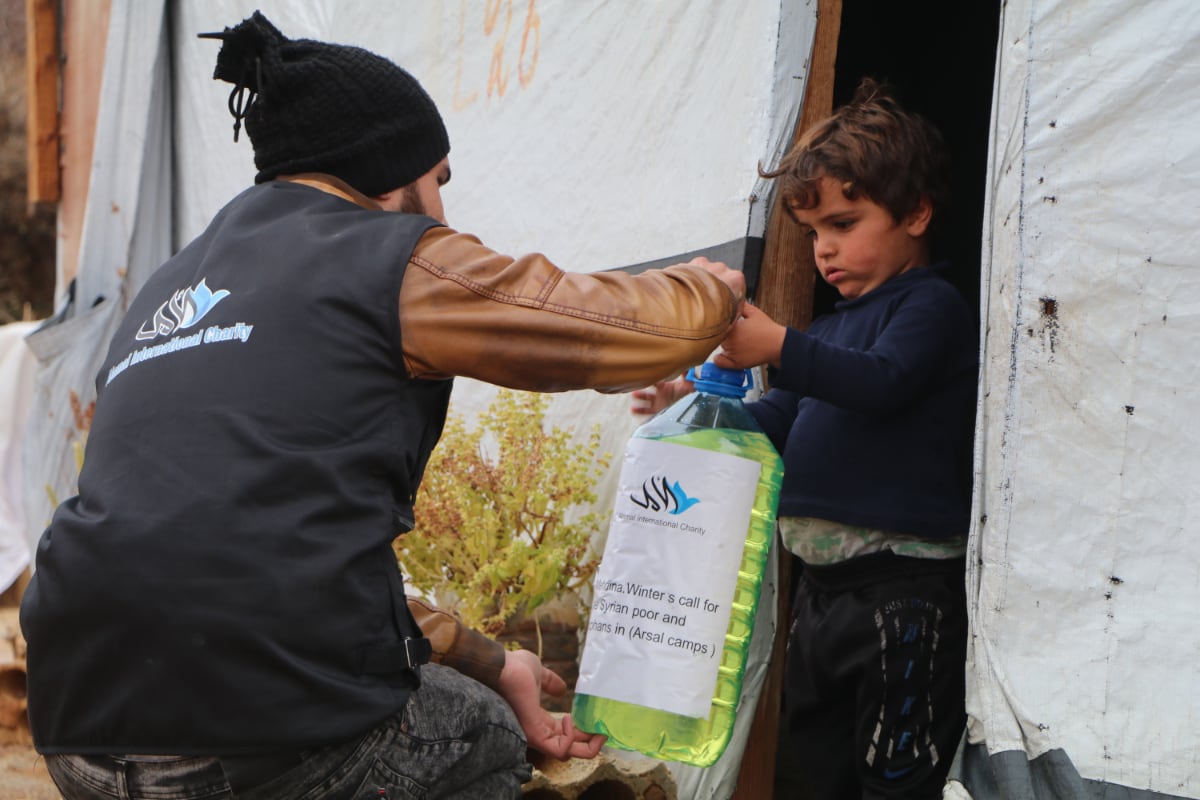

Al Amal International Charity and the Northside Islamic Center of San Antonio (NICSA) have come together to form a powerful partnership, joining forces to better serve communities in need both locally and internationally. Our combined efforts allow us to address the diverse needs of vulnerable populations while promoting spiritual growth, education, and understanding.

Al Amal International Charity is a humanitarian organization founded by young volunteers in Lebanon, focusing on providing aid to those affected by conflict and challenges in the Middle East. Expanding its reach beyond Lebanon, Al Amal now supports communities in Turkey, Syria, Palestine, and Yemen. By addressing major funding gaps and targeting areas often overlooked by other organizations, Al Amal has made a significant impact on countless lives.
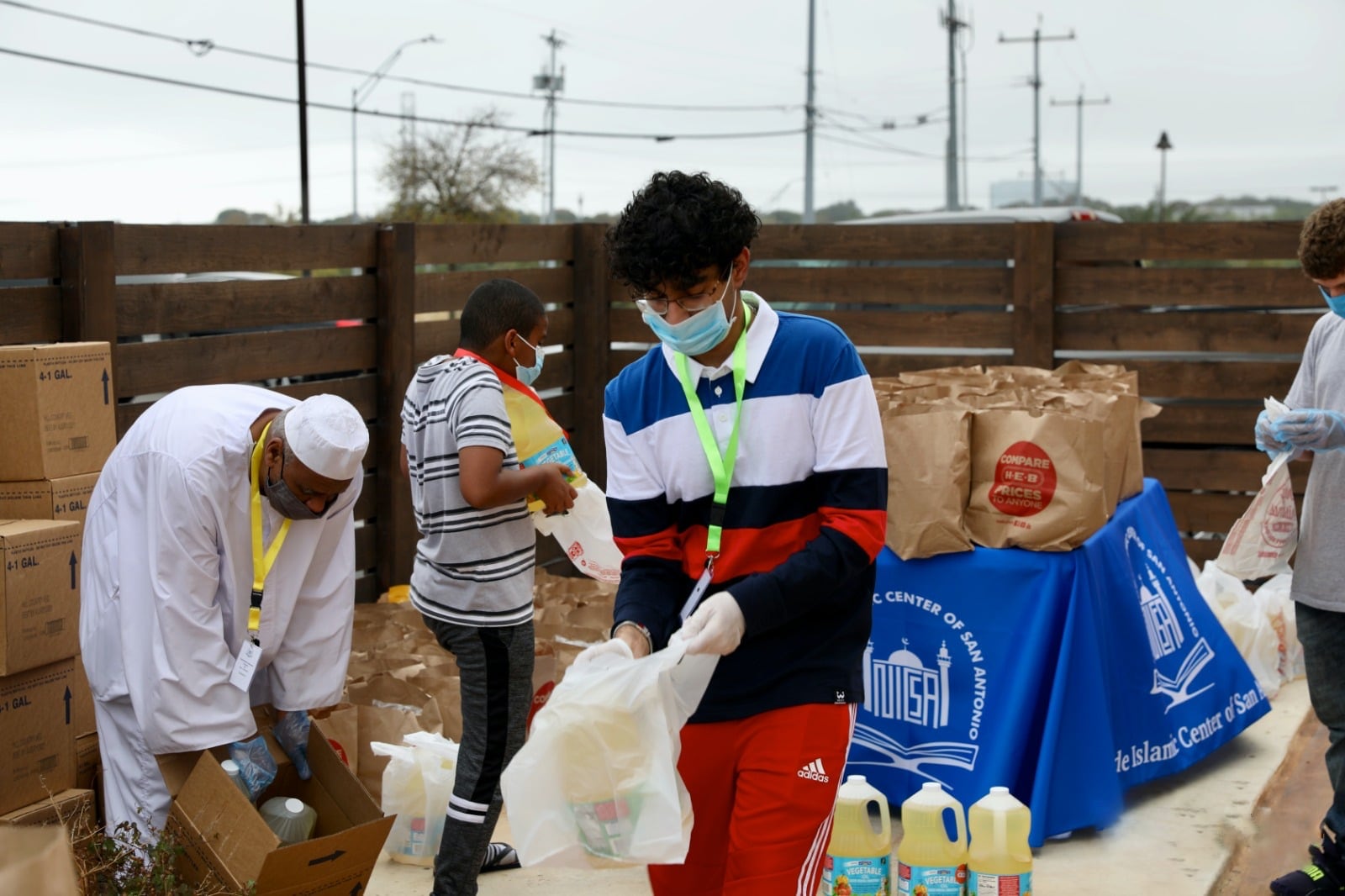

The Northside Islamic Center of San Antonio (NICSA) is a community-driven organization in San Antonio, Texas, dedicated to fostering a nurturing environment for the Muslim community's spiritual and devotional growth. NICSA provides essential services, such as daily congregational prayers, educational programs, counseling, and assistance. With plans to build a new Masjid and other facilities on a recently acquired property, NICSA aims to continue expanding its reach and impact.

Together, Al Amal International Charity and NICSA are committed to making a difference by combining their resources, expertise, and passion for helping those in need. Through our partnership, we aim to improve the lives of individuals and families both in the local San Antonio community and in crisis-stricken regions around the world. By working together, we believe we can create lasting change and hope for a brighter future.

Northside Islamic Center of San Antonio (NICSA) is a registered 501(c)(3) charity, Federal Tax ID#: 84-3665938. Your donation is tax-deductible.

Sunday, 5 February 2023

ISLAM IN CHINA, HALAL & TAYIIB FOOD, AUTHORISED & PURE - Sarah Joseph, Editor & CEO of emel media.


https://islaminchina.files.wordpress.com/2010/10/main_feature_opener.jpg 

Emel Magazine – Islam in China Special Issue


Sarah Joseph, OBE

Sarah Joseph is Editor & CEO of emel media. 

 Our Company

Having grown up in one of the world’s top model agencies, Sarah converted to Islam at the age of 16. A powerful and popular public speaker, she has lectured on Islam globally for over 20 years. Sarah was awarded an OBE by the Queen in 2004 for her services to interfaith dialogue and the promotion of women’s rights. 

She is listed as one of the 500 most influential Muslims in the world by Georgetown University and the Royal Jordanian Strategic Studies Centre. 

Her founding and editorship of emel in 2003 was a turning point in Muslim media. It created a paradigm shift in the way Muslims were portrayed and were marketed to. Sarah’s Facebook page, which has a large global following, declares her passion “to get people to recognise their shared humanity, and our common responsibility to this Earth.” She manages this through her work with emel Media Group, but also through other avenues, including her regular ‘Pause for Thought’ on The Chris Evans Breakfast Show - Britain's most popular radio show. 

Sarah’s work in the Muslim community and with emel Media Group means she has a wealth of knowledge and expertise which she uses to great effect to advise on the needs of Muslims to government and corporate bodies, as well as public and private institutions. Through these endeavours Sarah has become a leading expert on the Muslim Lifestyle market. 

A self-confessed perfectionist who absolutely loves her work, Sarah is the proud mother of three young children; she keeps chickens, and supports Tottenham Hotspur.


24 February 2012

Ogilvy Noor’s Shelina Janmohamed explains why brands should care

This article first appeared on www.ogilvynoor.com
If you’re serious about talking to Muslim consumers, then one of the first things you need to understand is the meaning of the term halal.

In colloquial parlance, the term halal is used in reference to meat that has come from an animal slaughtered according to Islamic prescription, which is remarkably similar to – although not identical to – Kosher guidelines.

Products must also exclude ingredients that are forbidden to Muslims, like alcohol and pig-derivative products. Halal means “permitted.” The opposite is haraam, “forbidden.”

When the Quran talks of halal it uses a broader description of “goodness and wholesomeness”; the essence is that the product from its origin through to its final consumption should exhibit purity, care for the animals and the environment and ethical treatment at every stage of its production.

In a world that over recent decades has moved towards mass production and away from traditional farming methods and local goods, Muslims – like other consumers – are increasingly concerned about their produce being ethical and organic. Muslims consider these to fall under the wider definition of halal.

However, to consider a whole marketplace of products is more than one short article can handle. So here we are going to stick to the basics of food.

There’s another reason for doing so: In our research looking at Muslim perceptions of the sharia-friendliness of a range of well-known brands, the ones related to food and beverage topped the list.

Muslims believe that their physical intake directly affects their spiritual life. That’s why Muslim consumers are so intent on ensuring what they consume is halal. And considering that the halal market is estimated at around $500 billion annually and growing, brands should pay attention.

Certified Halal

There is no global standard of halal; local boards pop up in every country. If you’d like your product certified halal, then the first step is to identify the certification bodies that will be most relevant to the Muslim consumers you are targeting.

If your product is entirely vegetarian, and contains no alcohol, then it’s worth noting that clearly on your packaging. The Chicago Tribune looked at the trend of rising farm-to-fork consciousness among Muslims, reporting that “some Muslims are making sure their food is not just halal, but organic, free-range and tayiib – Arabic for wholesome. They care as much about how the animal was killed as they do about how it was raised.”

Their concerns are part of growing consumer awareness and demands for ethical and organic food. In fact, a Dutch insights company called Innova published 10 key food trends for 2012 which included the values of purity, authenticity, sustainability and corporate social responsibility.

These values show a remarkable crossover with halal values, which point to the idea of wholesomeness, goodness and purity.

Pure & Good

For marketers looking to engage Muslim consumers – in particular in developed markets – there is an opportunity to capitalise on this growing intersection between the organic/ethical market and the halal market.

In the US, Whole Earth Meats is halal and organic. It markets its burgers based on tradition and wholesomeness, using these values to appeal to Muslim consumers first, underlining them with its halal status.

Consumers who are not Muslim also state that halal (and kosher) foods are preferential due to the care and cleanliness that goes into preparing them.

In the Ningxia region of China, which has a high Muslim population, Malaysian firm Fahim is about to implement a Halal Integrity Management solution. This will deliver exactly what we’ve been discussing here – an end-to-end solution for monitoring halal status from farm to fork. It’s an exciting development for Muslim consumers.

The Chairman of Fahim’s parent company explains the potential for crossover in his region: “Our target is not only the Muslims but also the non-Muslims. I was told by some Chinese people that they preferred halal food products to allay food safety concerns as halal in Chinese literally means pure and good.”

The lesson to take away from all this is that the potential for halal to appeal to Muslim consumers (and beyond) is open to all businesses and brands wherever they may be. The simple, and lucrative, first step is to reach out to Muslim consumers by ensuring your products are halal-compliant, and making sure that your Muslim consumers know it.

Image/Mustafa Khayat


Monday, 19 September 2016

Why Your Grandparents Didn’t Need To Diet by Natasha Longo

 Humans in wealthy countries just eat even if it kills them!  And they waste!
I started eating much more than I should ane less healthy as Monsanto and others made things worse!

by NATASHA LONGO
Every successive generation seems to be getting sicker, with more illness and disability. This despite government claims that the science of diet has mostly improved from just 50 years ago. These claims are far from the reality the modern world and its population experiences. Our grandparents used to make their own butter, cook with lard (?), fry their foods, drink full cream milk and they still looked so healthy while living so heartily. How did they do it? For starters they ate less, but their food was also healthier. Today we cut carbs, remove fat, cook less, eat more, consume genetically modified, artificially sweetened, processed foods and spend most of our time sitting. See the difference?


The trend becomes unmistakable once fat intake increases for a population. Once that number passes 30%: countries with higher average fat intake have the longest life expectancies. Fat intake has been transformed in modern day to low fat or no fat, high sugar and processed carbohydrates.

Grandfather-of-12 John Golding, who runs a family farm outside Grafton in northern New South Wales, says food was scarce when he was growing up.
“We ate less for sure because the food had to go around a big family. There were seven or nine kids in every family so you didn’t eat much at all. There were no ‘seconds’,” he said.

“We didn’t overeat and you’d restrict your bread intake because otherwise you’d run out.

“It was all healthy food. We always had a huge vegetable garden so we had cauliflowers growing in the winter time.”

In Unhappy Meals, a piece for The New York Times Magazine, best-selling author Michael Pollan says we can all cut back.

Science Says Calorie Restriction Increases Life Span
“The scientific case for eating a lot less than we currently do is compelling. ‘Calorie restriction’ has repeatedly been shown to slow aging in animals, and many researchers (including Walter Willett, the Harvard epidemiologist) believe it offers the single strongest link between diet and cancer prevention,” he said.

“Once one of the longest-lived people on earth, the Okinawans practices a principle they called ‘Hara Hachi Bu’: eat until you are 80 percent full.” (This was an Islamic Tradition too)

Organisms from yeast to rodents to humans all benefit from cutting calories. In less complex organisms, restricting calories can double or even triple lifespan. In studies, animals on calorie restriction diets die at an advanced age without any diseases normally related to aging. In contrast, among animals on a standard diet, the great majority (94 percent) develop and die of one or more chronic diseases such as cancer or heart disease.
According to the results of two previous studies, reducing calories activates the silenced information regulator genes, which prolongs cell life.

Processed Foods A Culprit
John says he and his wife Ollie, who does most of the cooking, rarely ate processed food.
“We didn’t have any packaged stuff at all,” he said. “When Dad bought this farm after the war, we’d milk two or three cows so you’d make your butter and custards.

“We were reared also on fried scones. We loved fried scones. Instead of baking the scones, we’d fry ’em. They were beautiful just with butter.

In Six Rules For Eating Wisely, a piece for TIME magazine, Pollan says we shouldn’t eat anything our great-great-great grandmother wouldn’t recognize as food.

“Imagine how baffled your ancestors would be in a modern supermarket … (most items) aren’t foods – quite – they’re food products,” he said.

“History suggests you might want to wait a few decades or so before adding such novelties to your diet, the substitution of margarine for butter being the classic case in point.
Their promise was that margarine would prevent disease. People around the globe questioned this advice, especially those who have valued butter for its life-sustaining properties for millennia. Today we know that butter is light years healthier than margarine ever could be.

“My mother used to predict ‘they’ would eventually discover that butter was better for you. She was right: the trans-fatty margarine is killing us. Eat food, not food products.

John, 79, eats everything but grew up on staples of rice, rolled oats and potatoes.

“When mum was rearing the five of us while dad was at the war she fed us on a lot of rice because that was cheap. I loved boiled rice with a bit of sugar on it, but now I don’t have sugar,” he said.

Pollan says the western diet has shifted radically from whole to refined foods, complex to simple carbohydrates, leaves to seeds and from food culture to food science.

Food Culture Is Not What It Used To Be 
Governments here and abroad have been cautioning the public for decades on the dangers of high fat diets. Their claims based on “their science” concluded that it was best to avoid fat because of its extra calories – and saturated fats raise the risk of heart disease. This low-fat mantra has been questioned for years by clinicians and nutritional scientists – not least because it has failed to halt the obesity epidemic. The fact is, high-fat diets lower blood sugar, improve blood lipids, and reduce obesity.
“The sheer novelty and glamour of the Western diet, with its 17,000 new food products introduced every year, and the marketing muscle used to sell these products, has overwhelmed the force of tradition,” he said.

“Nutritionism, which arose to help us better deal with the problems of the Western diet, has largely been co-opted by it, used by the industry to sell more food and to undermine the authority of traditional ways of eating.

“You would not have read this far into this article if your food culture were intact and healthy; you would simply eat the way your parents and grandparents and great-grandparents taught you to eat.”

Our grandparents also didn’t spend all day stuck at a desk or hours at night on the couch. They performed manual jobs and rode their horses everywhere at full gallop.

Food intolerances were unheard of back then and no-one, least of all John, feared carbs.
They also didn’t deprive themselves.

Despite becoming a fast food nation, John says his diet has improved with age.

“Our diet’s changed a little bit. We don’t eat fat or drippin’,” he said.

“The problem these days is fast food. Bloody McDonald’s.

“If people are getting big and fat, I don’t know why they keep eating. I can stand behind people (in line for meals) on a cruise and know what they’re going to order – greasy fish and chips.

“If you want to give up something, I think it’s easy. Well it’s easy for me – it’s just determination.”

Here’s to that.

Pollan’s nine principles of healthy eating:
1. Eat food… Don’t eat anything your great-great-grandmother wouldn’t recognize as food.

2. Avoid even those food products that come bearing health claims. Don’t forget that margarine, one of the first industrial foods to claim that it was healthier than the traditional food it replaced, turned out to give people heart attacks.

3. Especially avoid food products containing ingredients that are a) unfamiliar, b) unpronounceable c) more than five in number – or that contain high-fructose corn syrup. None of these characteristics are necessarily harmful in and of themselves, but all of them are reliable markers for foods that have been highly processed.

4. Get out of the supermarket whenever possible. You won’t find any high-fructose corn syrup at the farmer’s market; you also won’t find food harvested long ago and far away. What you will find are fresh whole foods picked at the peak of nutritional quality. Precisely the kind of food your great-great-grandmother would have recognized as food.

5. Pay more, eat less. There’s no escaping the fact that better food – measured by taste or nutritional quality (which often correspond) – costs more, because it has been grown or raised less intensively and with more care.

6. Eat mostly plants, especially leaves … By eating a plant-based diet, you’ll be consuming far fewer calories, since plant foods (except seeds) are typically less” energy dense” than the other things you might eat.

7. Eat more like the French. Or the Japanese. Or the Italians. Or the Greeks. Confounding factors aside, people who eat according to the rules of a traditional food culture are generally healthier than we are. Any traditional diet will do: if it weren’t a healthy diet, the people who follow it wouldn’t still be around.

8. Cook. And if you can, plant a garden. The culture of the kitchen, as embodied in those enduring traditions we call cuisines, contains more wisdom about diet and health than you are apt to find in any nutrition journal. Plus, the food you grow yourself contributes to your health long before you sit down to eat it.

9. Eat like an omnivore. Try to add new species, not just new foods, to your diet. The greater the diversity of species you eat, the more likely you are to cover all your nutritional bases.
Sources:
aspetjournals.org news.com.au preventdisease.com wustl.edu

Natasha Longo has a master’s degree in nutrition and is a certified fitness and nutritional counselor. She has consulted on public health policy and procurement in Canada, Australia, Spain, Ireland, England and Germany.

Wednesday, 1 June 2016

KIND OF FASTING CHOSEN BY GOD BY SHEIKH HAMZA YUSUF MARK HANSON

My heart is with all humans with a HEART! 

 
Kate Bates
3 hrs · Friday 3rd of June 2016
·
Poignant lyrics --succinct message - check it out if U hate war

 https://www.youtube.com/watch?v=KTkQTYXCPZo

Johnny I Hardly Knew Ye · The Irish Rovers (English lyrics // español letra)

César Díaz Caviedes

 Auntie-Mum with her Baby and three nieces

Ramadan Advice - Where is Your Heart? by Shaykh Hamza Yusuf

Zaytuna College